I figured out a new way to search the review archives, which go back 15 years or more. It helped me build a show of drum-led duos and jazz violinists. I made mistakes like front-announcing the wrong song titles a few times, but overall the show flowed pretty well.
Hour 1: Starts at 9:55 so you get a few minutes of Mitch Lemay. Then I get percussive with Max Roach’s M’Boom, Idris Muhammad, Wadada Leo Smith & Jack deJohnette, Walt Dickerson. I enjoyed this hour a lot, it was very percussive and exciting.
Hour 2: Test, Weasel Walter & Chris Pitsiokos, Joe McPhee.
Hour 3: David S. Ware, Joseph Jarman, Anthony Braxton, wrapping up with Ornette Coleman. More instrumental this hour but very rhythmic at times.
Hour 4: Joe Venuti, Billy Harper, Rob Mazurek and Exploding Star Orchestra.
I’ve reviewed some great records for KFJC in the past two months. I write these reviews and read them in a booming voice at the staff meeting, I sit at the top of the lecture hall and let ‘er rip. Most have youTube links so you can check out the tunes yourself. It’s a far-reaching mix of jazz, psych, and classical. Dig it.
Jean Guerin, Tacet (Souffle Continu)
Originally released in 1971 on French cult label Futura. The most expensive production they ever did, and worth every penny. This is Musique concréte psychedelic jazz. It has something for everyone! Reissued by Parisian label & record shop Souffle Continu (“Continuous Breath”). Turns out Futura owner Gerard Terronés is a close neighbor of the shop.
Squeaky brass splatters and furtive bass, high-pitch solfege singing, saxophone variations inter-cut with vintage electronics, analog drum machines, patch-bay air sirens, burbling cauldrons, and something called “water trumpet”. Primal, futuristic, dystopian.
Glenn Stallcop, Myths and Fairy Tales (Self-released)
Solo piano improvisations in the western classical tradition. Pensive, expressive, melancholy. Recalls Debussy. Recorded in a cabin in Arizona. Glenn Stallcop plays double bass in the Phoenix Symphony Orchestra.
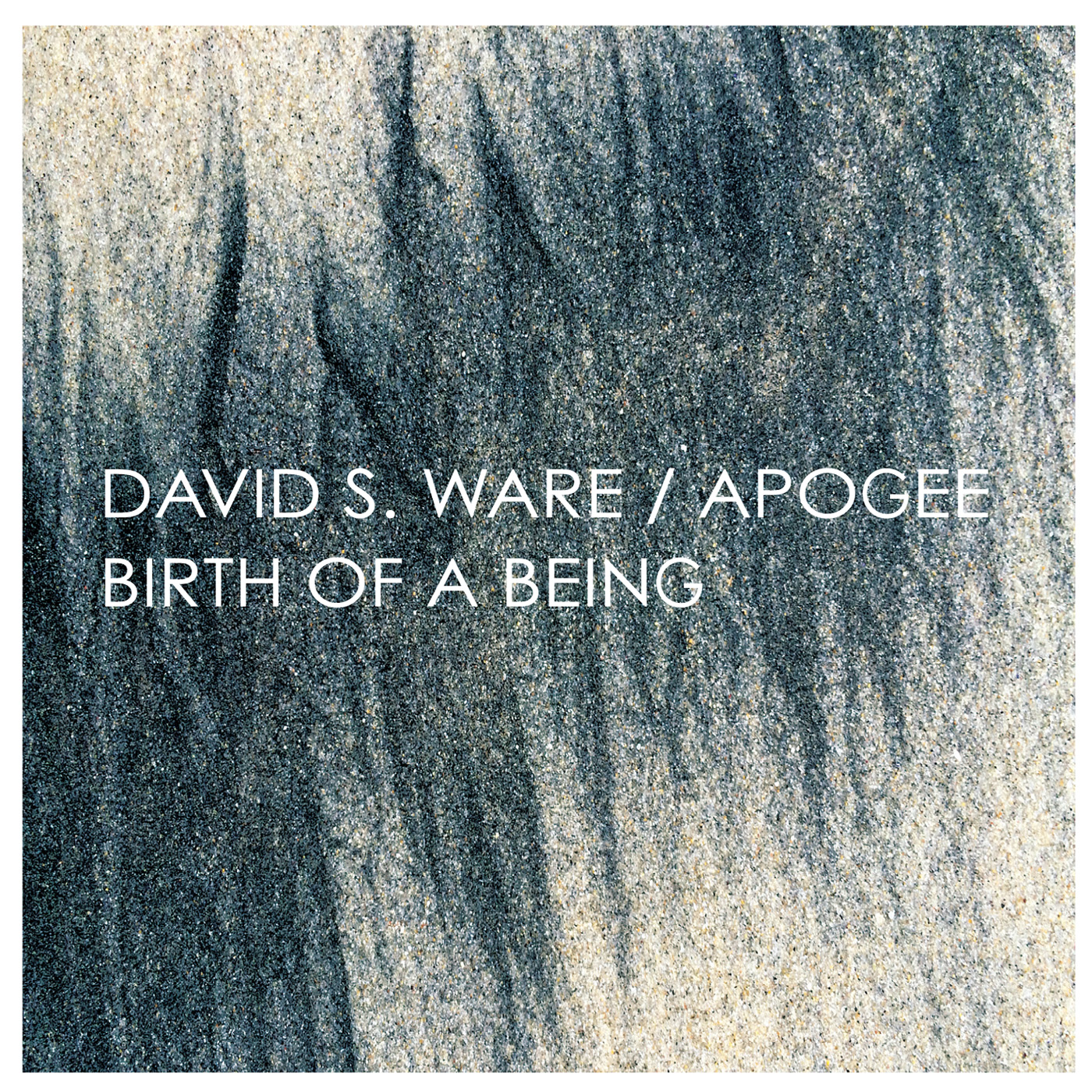
David S. Ware / Apogee, Birth of A Being (Aum Fidelity)
Capably remastered from 8-track tapes, the first recordings of David S. Ware, with his Berklee School trio, Apogee: Cooper-Moore on piano and Marc Edwards on drums.
CD1 was originally pressed by hat Hut in 1979, and is long out of print. CD2 features material from the same sessions that has never before been issued. Ware had been a part of the Cecil Taylor Unit for a few years and the influence is apparent.
Different versions of “Prayer” open both CDs and both are compelling in their own ways. CD1 is a collective blowing session, while CD2 contains a more varied mix of material and arrangement. “Ashimba” (#4, CD2) features a solo recording of Cooper-Moore playing a xylophone of his own design and construction. “Solo” (#5, CD2) is David alone and very powerful, a sweet interrogation.
Rob Mazurek / Galactic Star Orchestra, Galactic Parables Volume 1 (Cuneiform Records)
Sides A-C recorded live in Sardinia, broadcast on Italian radio. Sides D-F recorded live in Chicago in front of a hometown crowd.. Large ensemble improvising music like Sun Ra, with poet and electronics. The poet, Damon Locks is x-Trenchmouth with Fred Armisen.
A, B, & E are sidelongs, last track on C has a great cornet solo by Mazurek.
Lots of other Rob Mazurek and other Exploding Star Orchestra CDs in the Jazz library.
On the back of the release is a quote from the late Amiri Baraka upon hearing the Sardinian broadcast, here’s another: “A man is either free or he is not. There cannot be anyapprenticeship for freedom.”
Mimi Stillman and Charles Abramovic, Freedom (Innova Recordings)
Authoritarians fear abstraction because, who knows, it might be about them.
Two commissions and one long-lost recovery. Performed by the Dolce Suono Ensemble of Mimi Stillman on flute and Charles Abramovic at the piano.
Tracks 1-5 Composed by Miecyzslaw (me-etch-eh-SLAV) Weinberg in 1947. Weinberg was a close friend of Dmitri Shostakovich, and along with Prokofiev, they were persecuted in Stalin’s 1948 Anti-Formalist purges. Recovered from the St. Petersburg library, this is the premiere recording.
Tracks 6-9 commissioned from Russian-Jewish composer David Finko in 2012, reflections on narrowly escaping the Nazis, and later persecution by the Soviets. The flute is earsplitting at times.
Tracks 10-12 add Yumi Kendall’s cello for Remembering Neda, commissioned from Richard Danielpour in 2009. Composed during the Iran protests, in memory of Neda Agha-Soltan, murdered protesting in Tehran.
Powerful meditations on upheaval and freedom, top quality performances. Stillman in particular is probably the most celebrated flutist of her generation, having received awards from Chamber Music America, Young Concert Artists, and many others.
Billy Harper Quintet, Live on Tour In The Far East, Vol. 2 (SteepleChase)
Texas Tenor Billy Harper on tour with his quintet in Taiwan. The first track is Priestess, Harper’s most famous composition. The next tune is also by Harper, and he is very energized on the horn. The first two tracks are 17 and 25 minutes, great for the bottom of the hour. He solos first on both tracks, until trumpeter Eddie Henderson takes over at about the ten- or 11-minute mark. The band displays impressive command of the material, fluidly changing arrangements to evoke different moods. The album was remixed and mastered by Danish jazz god Nils Winther, and it sounds great.
While John was checking out more stuff at the Fancy Food Show, we checked out lunch, the Bay Bridge, Embarcadero trolleys, and a large seagull. John John’s big question both on the drive up and at the pier: “What’s that water doing right there?” My answers were clearly unsatisfactory, as each reply prompted his requisite follow up question, “Why?”
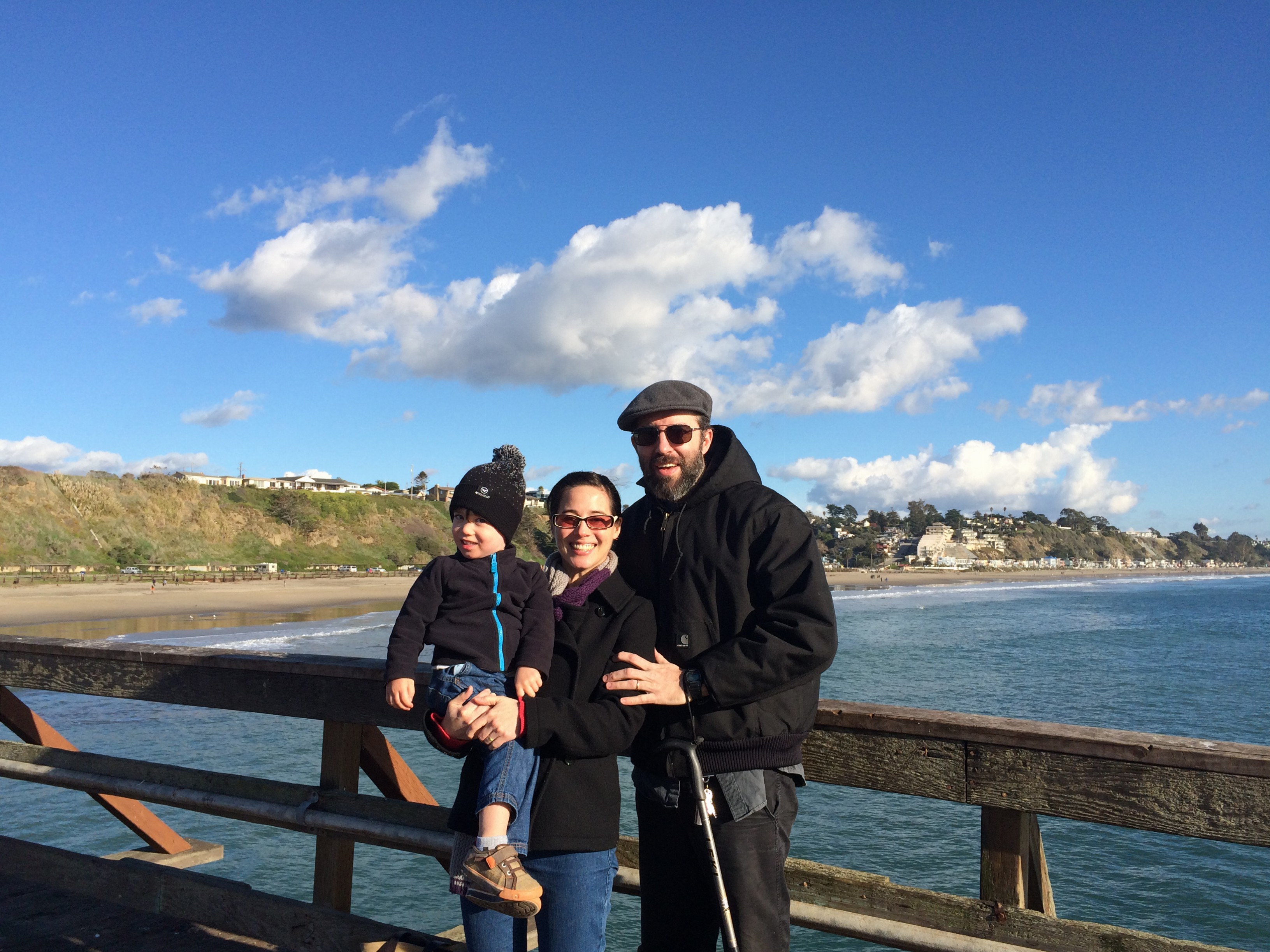
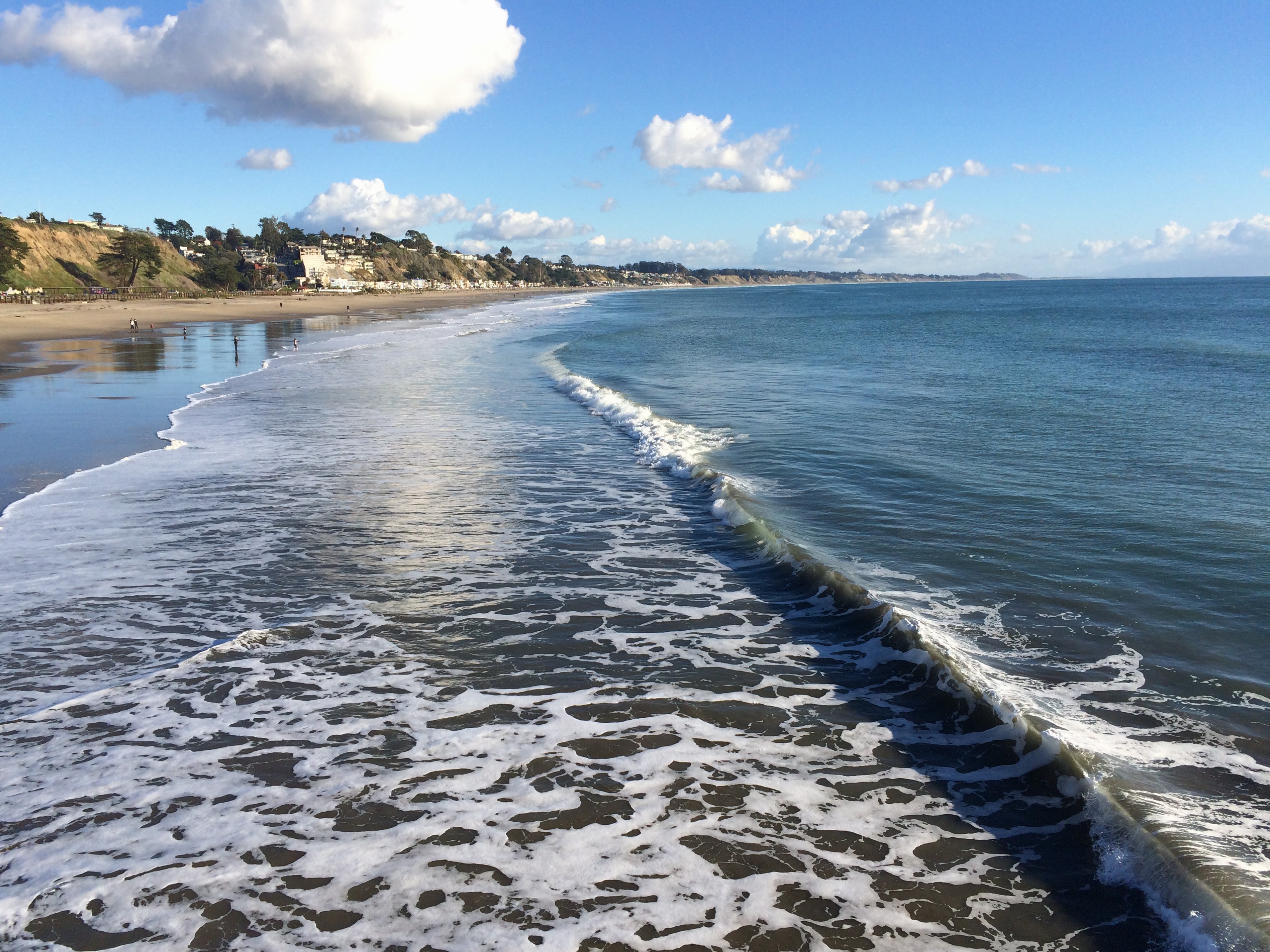
This year, we had sublime weather on Christmas Day. It was perfect for our annual trek out to greet the Pacific Ocean as a family.
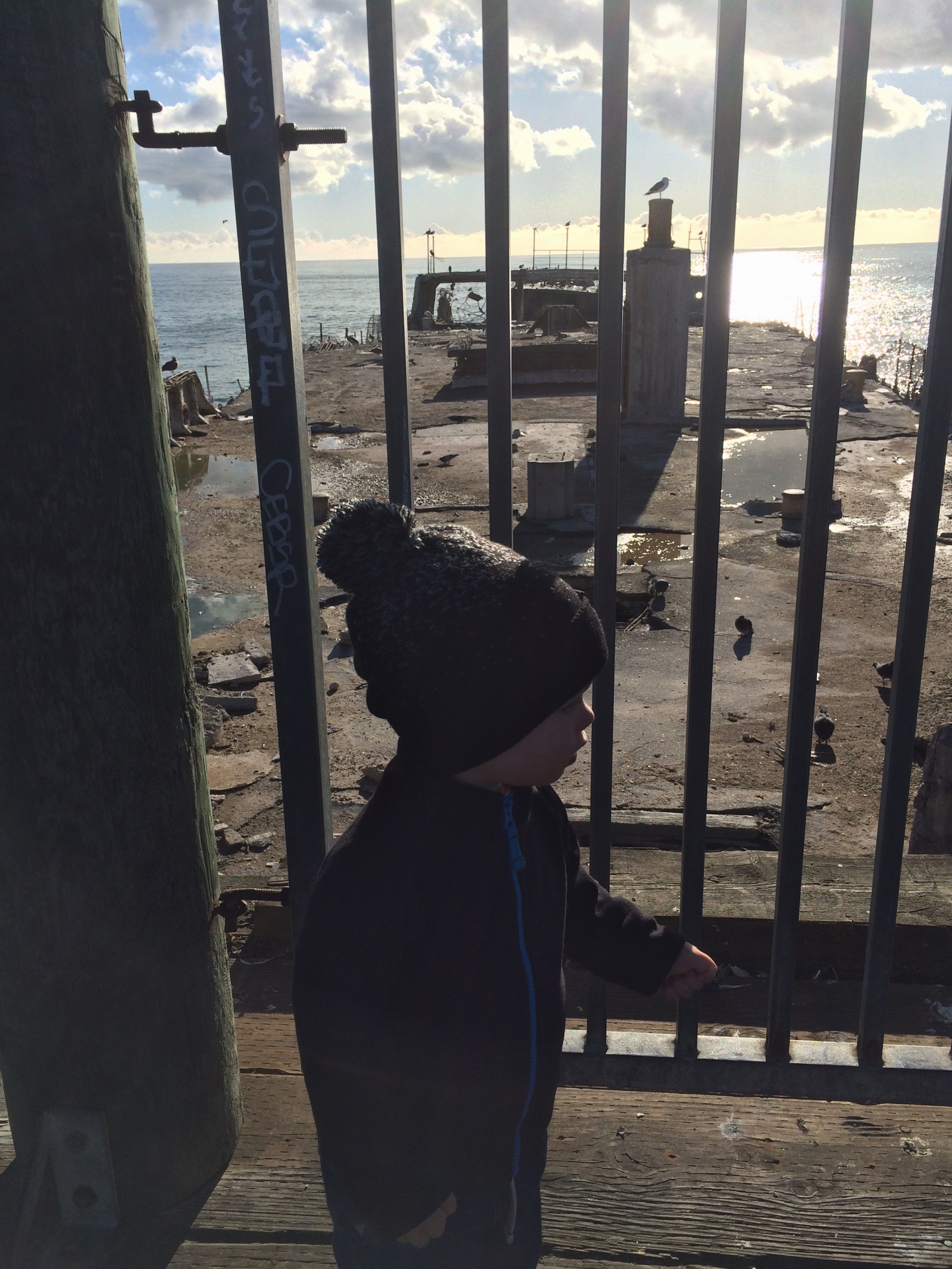
On the pier, John and John-John sat on a bench and watched the waves roll in. Glad to be raising another human fascinated by the unique yet repetitive nature of crashing waves and sea foam patterns. He was mesmerized.
After, John-John ran around foot of the cliffs, picking and exploring the ice plant, cold barbeques, and picnic tables. Child paradise!
It was Freak Week, so the break clock was suspended and the only break I was required to take was for the FCC-mandated legal ID at the top of the hour – Broadcasting from foothill college this is KFJC Los Altos Hills. DJs come up with special themes for their shows, focusing on artists in a musicological in-depth way. I couldn’t think of anything that satisfied me so I took a strucuralist approach. I went to the library, in the first box of the A section and played with the library. In four hours, I got from Kamal Abdul Alim to the All Star Trumpet Spectacular. The show was actually fun to do, a lot of the tracks were great listens and the show flowed smoother than I would have expected. In a future Jazz Collective show, I’ll continue it.
Hour 1: Starts at 9:55 so you get a few minutes of Ding Dong DJ’s wildly provocative Freak Week show. Then I play from Kamal Abdul Alim to Joshua Abrams.
Hour 2: From Joshua Abrams to Cannonball Adderley.
Hour 3: Cannonball Adderley to Joe Albany.
Hour 4: Joe Albany to the All Star Trumpet Spectacular.
I filled in for Thurston Hunger, who’d broadcast the State Champions / Sophomore Records live mic the day before. I’d been a listener to The Eating Disorder for some time. It was Freak Week, so I didn’t have to do any breaks other than the top of the hour. I broke in periodically to tell people about what they were hearing. The Eating Disorder features some ‘out’ sounds, so that’s where my programming went.
Hour 1: Starts at 6:55 so you get a few minutes of Spliff Skankin. I spend most of hour with the sounds of Ethiopia, Egypt, and Morocco. Then I jump off the deep end and drown with Junko & Michel Henritzi.
Hour 2: Jazz, brass quartet, reed duo, then creepy horror Stelvio Cipriani. Some cool segues this hour.
Hour 3: Towers, wierdo I cover the waterfront Eugene Chadbourne, Chad Ho Bynum entire side – cool band.
Repeating vocal samples and distorted vocalizations set to electro-acoustic percussion. Loop 2.4.3 is composed and performed by Thomas Kozumplik (The Clogs). Pulsating rhythms. Chimes and hand drums in time and space.
This was the first daytime Stone Cold Lampin’. It was 10a-2p on Thursday, November 5th. I played all jazz. I’ve got jazz on my mind. My last show was the Jazz Collective, and the next show I’m signed up for is another Jazz Collective, on November 20th. I’ve been reviewing a lot of jazz recently. I stayed far out for most of the show. I played several records from the excellent improvising beings record label. I spent almost and hour and a half digging into the works of bandleading bassist Joelle Leandre.
Hour 1: Starts at 1:55 so you get a few minutes of Sally Goodin. I break right into free improvisation and stay there wallowing.
Hour 2: Starts out vocal, then ensemble improv, then I start playing Joelle Leandre.
Hour 3: Joelle Leandre for the hour.
Hour 4: More free improvisation, often with amplified instrumentation.
I had a dream I was in Paris. I was at a super fancy clothing store. It was the flagship of the brand, and the designers’ offices were adjacent to the store. From the sales floor you could walk right into an office. I found this great gray trench coat with zippers, turtleneck sweater and leather details. I went into an office to try it on, because there was a line at the waiting room and I didn’t want to wait. Marc Jacobs came in while I was trying it on. he told me to get out. He pursued me on to the sales floor. I got in line at the checkout, and I saw that the trenchcoat was 505 Euros. We don’t have that kind of money, so I ditched the coat and left the store. It was in Paris, there were cafés and croissants. I was trying to get off of the property, I was being chased by Marc Jacobs and some goons. I got out to the sidewalk and then slipped down into the Parisian sewer. Which was like the catacombs. Suddenly I was watching a news program about the sewer. The announcer said it was the only sewer in the world that was still inlaid with cobblestones and other ancient masonry. I looked in my backpack and found a black pea coat. I put it on and waited until the whole thing blew over.
The experience was akin to an International Cafe commercial (Anyone remember those? “Jean-Luc!”). Sitting at the dinner table with my family – imagine it:
I’m holding a bowl of soup up, inhaling the rich scent, looking through the gently curling steam at my loving husband, chef and creator of this amazing dish. The buttery-richness of homemade stock mixed with kabocha squash. Every sip brought the soft focus back to this dinner time pastoral, blurring out the loud and fussing toddler just out of frame to my left, probably throwing food on the ground and shouting no or something like that. Another sip. I look out the sliding glass door to see the fading colors of yet another beautiful sunset. The perfect end to what must have been a perfect day. “Honey,” I didn’t say because I don’t call anyone that, “this soup is perfection. Every swallow is like going on vacation.” I actually did say that second part. And it was true. So rich and sumptuous. So yummy.
That’s when I learned that, in addition to kabocha squash and chicken stock, the soup also had an entire stick of butter in it.